Modern automatic and manual transmissions are complex mechanical systems that control how engine power reaches the wheels.
When a transmission stops shifting, it is not a random malfunction. It is a direct mechanical response to changes in the vehicle’s operating conditions.
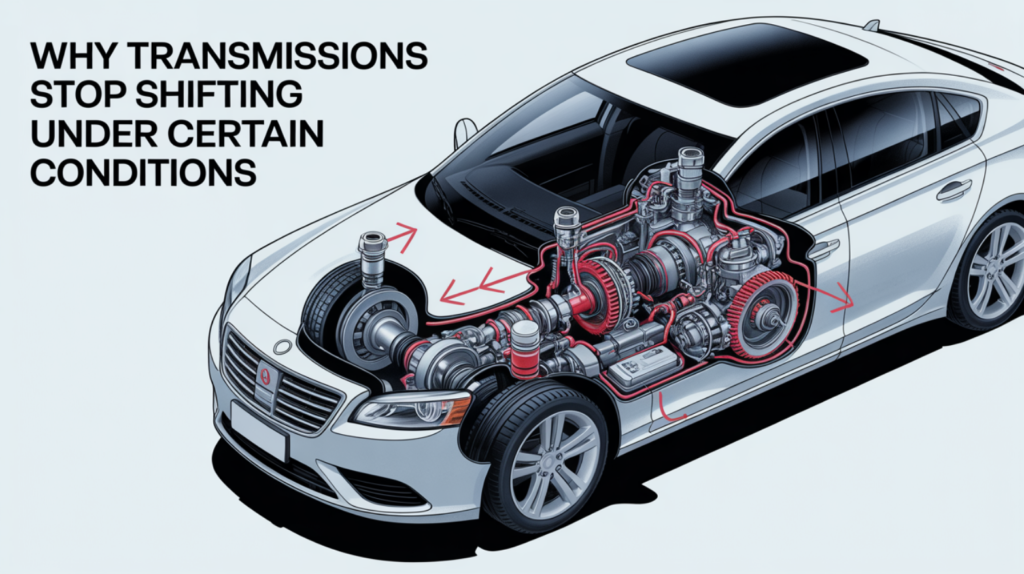
This guide explains why transmissions stop shifting under certain conditions, how those conditions influence internal components, and what these symptoms reveal about the health of the system.
How Transmission Shifting Actually Works
A transmission manages gear selection based on load, speed, temperature, and driver input.
Sensors monitor engine speed, vehicle speed, throttle position, and fluid pressure.
The control unit adjusts shift timing using that information.
As long as these signals remain balanced, gear changes feel smooth and predictable.
When even one factor moves outside its normal range, shifting behavior begins to change.
That hesitation you feel at a traffic light, on a hill, or during a long drive is not accidental. It reflects a specific operating stress acting inside the system.
Why Conditions Matter More Than Mileage
Many drivers believe shifting problems appear only in high-mileage vehicles.
In reality, operating conditions influence transmission behavior just as strongly as wear.
Temperature changes fluid thickness.
Moisture affects electrical connections.
Vehicle load increases internal pressure.
Driving style influences heat buildup.
As these forces interact, they create recognizable patterns of failure.
This is why a transmission may work perfectly one moment and refuse to cooperate the next.
Common Conditions That Interrupt Shifting
1. Temperature Extremes
Cold fluid thickens.
Hot fluid thins.
Both conditions alter internal pressure.
When this happens, the transmission may hesitate, refuse to upshift, or fail to engage at all.
This explains why many drivers experience shifting failure during winter mornings or summer heat waves.
In such cases, even basic materials inside the system, from cold-weather internal components to heat-sensitive seals and sensors, become part of the problem.
2. Motion-Based Stress
Turning, accelerating, braking, and climbing hills each place unique stress on the drivetrain.
During sharp turns, fluid shifts inside the transmission.
Under heavy acceleration, internal pressure rises.
While braking, torque flow changes.
On steep climbs, load increases across every gear.
When these forces exceed normal limits, shifting can pause or fail.
This is why drivers often report that the transmission stops shifting when turning, accelerating, braking, or while driving uphill.
Each situation reflects a different mechanical imbalance.
3. Idle and Traffic Conditions
At idle, cooling airflow drops and internal temperatures rise.
In traffic, constant shifting creates repeated heat and pressure changes.
Together, these conditions overwhelm weakened components and reveal underlying problems.
It becomes clear why some transmissions stop shifting while idling or during long periods of congestion.
4. Environmental Exposure
Water intrusion disrupts electrical signals.
Humidity accelerates corrosion.
Road spray contaminates connectors and sensors.
When moisture reaches critical areas, the transmission may lose its ability to interpret sensor data correctly.
This explains why many drivers encounter shifting failure after driving in wet conditions.
5. Prolonged Operation
Extended driving builds heat.
Heat degrades fluid performance.
Degraded fluid reduces pressure stability.
After hours on the road, a transmission may suddenly stop shifting even though it felt fine earlier.
This common experience appears clearly in cases where the transmission fails after a long drive.
6. Heavy Loads
Towing increases torque demand.
Higher torque places additional stress on internal clutches and gears.
As a result, transmissions frequently lose shifting capability when towing, especially if cooling capacity or fluid condition is already compromised.
Why These Symptoms Should Never Be Ignored
A transmission does not misbehave without reason.
Every delayed shift, missed gear, or refusal to engage reflects a real mechanical imbalance.
When those warnings are ignored, minor irregularities become permanent damage.
When recognized early, most condition-based shifting problems can be stabilized, repaired, and prevented from spreading.
What Torque.autos Focuses On
At Torque.autos, we examine real-world transmission behavior under the conditions drivers actually experience.
Our guides connect symptoms to mechanical causes so you can diagnose problems logically instead of guessing.
This pillar serves as your central reference for understanding why transmissions stop shifting and how each condition contributes to that failure.
Final Understanding
A transmission responds directly to its operating environment.
When temperature, load, motion, moisture, or prolonged stress exceed safe limits, shifting behavior changes.
This is not coincidence.
It is the mechanical language of the vehicle communicating its limits.
Once you understand those signals, you stop fearing the problem and start solving it.
That knowledge, applied early, often makes the difference between a minor repair and complete transmission failure.