Acceleration is one of the moments when a transmission works hardest. The engine demands more power, internal pressure rises, and gear changes must happen with perfect timing. When something in that chain fails, the transmission may hesitate, refuse to shift, or feel as if it loses connection with the road.
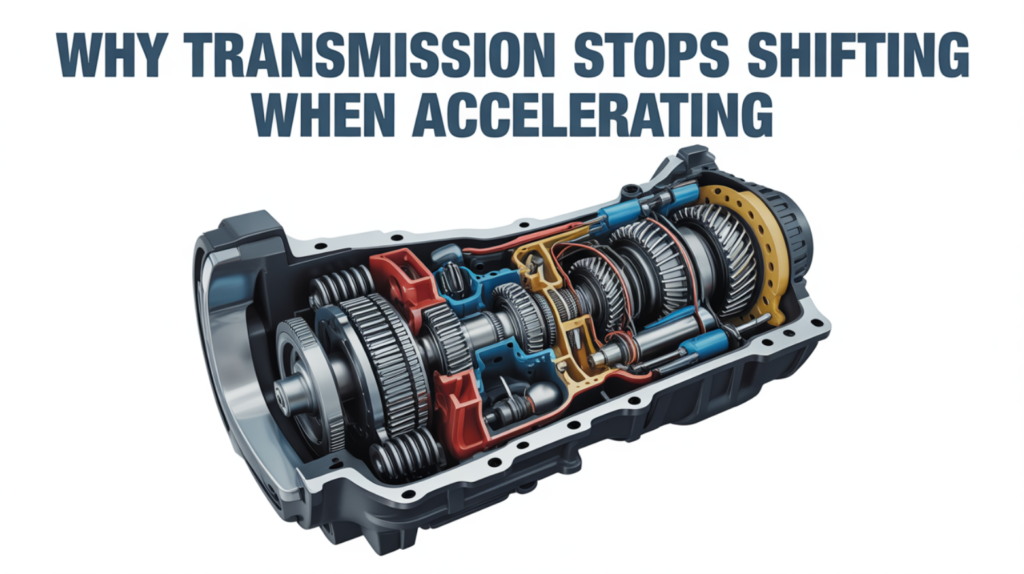
Many drivers notice this problem only under throttle, while the vehicle feels normal during gentle cruising.
For a deeper look at how different driving situations influence shifting behavior, the complete breakdown is available in this main guide on transmission shifting problems under varying conditions:
conditions that interrupt normal transmission shifting.
Why Acceleration Places Unique Stress on the System
When you press the accelerator, torque output increases sharply. The transmission must raise hydraulic pressure to hold clutches firmly while selecting the next gear. At the same time, sensors adjust shift timing to balance performance and protection.
If fluid is weak, pressure leaks, or internal wear is already present, this sudden demand exposes the problem. The transmission hesitates, flares between gears, or refuses to upshift at all.
This is why many acceleration-related issues appear suddenly even if the vehicle seemed healthy moments earlier.
How Acceleration Problems Connect With Other Symptoms
Acceleration problems rarely exist alone. Vehicles that struggle under throttle often show similar instability once heat builds up, because rising temperature further reduces fluid pressure and seal integrity.
Likewise, drivers who feel hesitation during acceleration frequently report that the transmission later behaves unpredictably after extended driving, when sustained heat and load combine to stress the system.
The Role of Fluid and Internal Wear
During acceleration, the transmission relies heavily on fluid pressure to prevent clutch slip. When fluid breaks down or components wear, that pressure becomes inconsistent. Even brief pressure loss interrupts gear engagement.
Over time, this repeated slipping generates heat, accelerates wear, and weakens the system’s ability to shift under any demanding condition.
Why Acceleration Symptoms Should Never Be Ignored
Hesitation during acceleration often marks the beginning of larger transmission failure. What starts as a momentary delay can grow into constant slipping, harsh shifts, or complete loss of gear engagement.
Early diagnosis prevents this progression.
How to Reduce Acceleration-Related Shifting Problems
Keeping fluid fresh, maintaining correct levels, and avoiding aggressive throttle when symptoms appear can significantly reduce internal stress. These steps stabilize pressure and protect the transmission from escalating damage.
Final Understanding
Acceleration places the highest demand on transmission pressure and control systems. When internal balance breaks down under that demand, shifting starts behaving unpredictably.
Acceleration hesitation often marks the point where internal wear begins to compound rapidly.