Climbing a hill pushes a vehicle into one of its most demanding operating states. Engine load increases, torque demand rises, and the transmission must continuously adjust gears to maintain momentum.
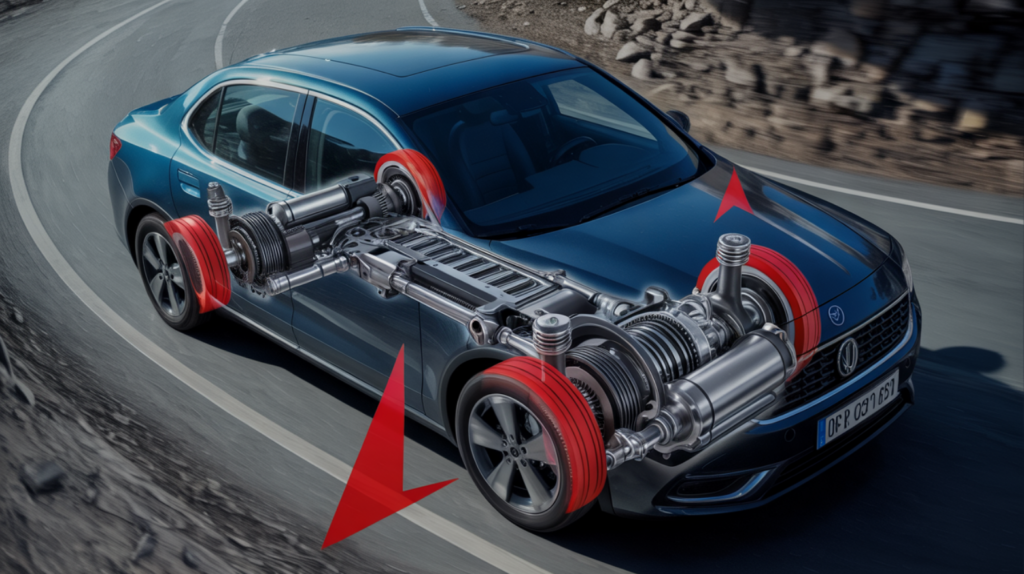
When something in that system loses balance, shifting hesitation or failure often appears right in the middle of the climb.
Many drivers only experience this problem on steep roads, even though the transmission feels fine on flat ground.
To understand how this fits into the larger pattern of shifting failures, the main diagnostic guide breaks down how different driving conditions influence transmission behavior:
what causes transmissions to stop shifting in real driving situations.
Why Uphill Driving Strains the Transmission
Driving uphill forces the transmission to operate under sustained load. Hydraulic pressure must remain high, clutches must hold firmly, and the cooling system must dissipate rising heat. Any weakness in fluid condition, pressure control, or cooling becomes exposed quickly.
When pressure drops or fluid overheats, the transmission hesitates to shift. Sometimes it locks itself into a single gear to prevent damage. To the driver, this feels like the vehicle has lost power even though the engine continues working hard.
How Hill-Related Problems Connect With Other Symptoms
Uphill shifting problems often reveal themselves alongside issues during acceleration, since both situations place heavy demand on pressure and torque management.
Drivers who struggle on hills may also notice that the transmission becomes unreliable after extended trips, when sustained heat and load finally overwhelm weakened components.
The Influence of Fluid and Cooling
Fluid condition becomes critical during uphill driving. As temperature rises, degraded fluid loses its ability to maintain stable pressure. At the same time, restricted cooling airflow on steep climbs makes it harder for the system to shed heat.
This combination quickly destabilizes shifting behavior.
Why Uphill Symptoms Should Be Taken Seriously
Shifting problems on hills often indicate that the transmission is operating at the edge of its capacity. Continued driving under these conditions accelerates internal wear and dramatically increases the risk of major failure.
Early intervention can prevent this cycle from turning into permanent damage.
How to Reduce Uphill-Related Shifting Issues
Maintaining fluid quality, ensuring the cooling system functions properly, and avoiding excessive throttle on steep climbs when symptoms appear all help protect the transmission. These habits stabilize internal pressure and extend component life.
Final Understanding
Driving uphill places sustained stress on the transmission’s pressure, cooling, and control systems. When those systems cannot maintain balance, shifting struggles to maintain proper pressure control.
Hill-related shifting trouble typically indicates the transmission is approaching its thermal and mechanical limits.