Some transmission problems only appear after rain, washing the car, or driving through standing water. The vehicle feels normal in dry conditions, then suddenly hesitates, slips, or refuses to shift once everything gets wet.
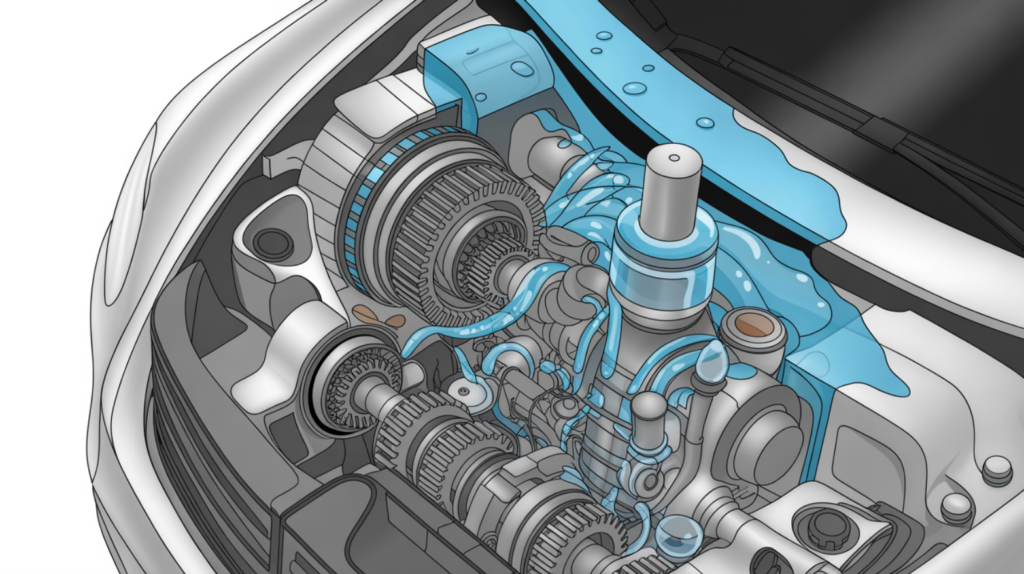
For many drivers, this behavior seems mysterious, but it follows a very real mechanical pattern.
To understand how this fits into the full system of shifting failures across different conditions, the main diagnostic guide explains the broader structure in detail:
why shifting problems occur under certain driving conditions.
How Moisture Interferes With Transmission Systems
Water does not need to enter the transmission housing itself to cause trouble. Moisture affects sensors, wiring connectors, solenoids, and electronic control components. When these elements become wet, electrical signals weaken, short, or fluctuate.
As sensor data becomes unreliable, the transmission control unit struggles to determine proper shift timing. The result is hesitation, missed shifts, or complete loss of gear engagement.
This is why problems often appear suddenly after rain or driving through puddles, even if the vehicle had been operating normally moments before.
Why Wet Conditions Reveal Hidden Electrical Issues
Many vehicles develop minor wiring corrosion or insulation wear over time. Under dry conditions, those weaknesses remain unnoticed. When moisture enters the picture, the electrical system becomes unstable.
Drivers experiencing this often discover that the same instability later appears while waiting at stoplights, when voltage and pressure margins are lowest.
Others notice that the transmission also becomes unreliable during turns, when sensor feedback and load change at the same time.
The Relationship Between Moisture and Long-Term Damage
Repeated moisture exposure accelerates corrosion, degrades connectors, and damages insulation. Over time, what began as an occasional wet-weather symptom becomes a persistent shifting problem under many conditions.
Without intervention, electrical faults spread, making accurate transmission control increasingly difficult.
Why Wet-Related Symptoms Should Never Be Ignored
Moisture-related shifting issues often mark the early stages of electrical system failure. Left untreated, these faults expand and eventually cause permanent transmission malfunction.
Early inspection and sealing of connectors and wiring can stop this progression before serious damage occurs.
How to Reduce Wet-Weather Shifting Problems
Avoid deep water whenever possible, inspect wiring and connectors for corrosion, maintain protective seals, and address even minor electrical issues promptly. These steps significantly reduce moisture-related risk.
Final Understanding
Wet conditions disrupt transmission control by interfering with electrical signals and sensor accuracy. When the control system loses reliable input, shifting falls outside normal operating behavior.
Moisture-related shifting faults rarely remain isolated once corrosion begins spreading.