Some of the most alarming transmission problems appear after hours on the road. The vehicle drives perfectly at the start of the trip, then slowly begins to hesitate, slip, or refuse to shift.
By the time the destination is near, the transmission feels completely different from when the journey began.
This behavior follows the same condition-based patterns explained in the main diagnostic overview of shifting failures across driving situations:
how different driving conditions affect transmission shifting.
What Prolonged Driving Does to the Transmission
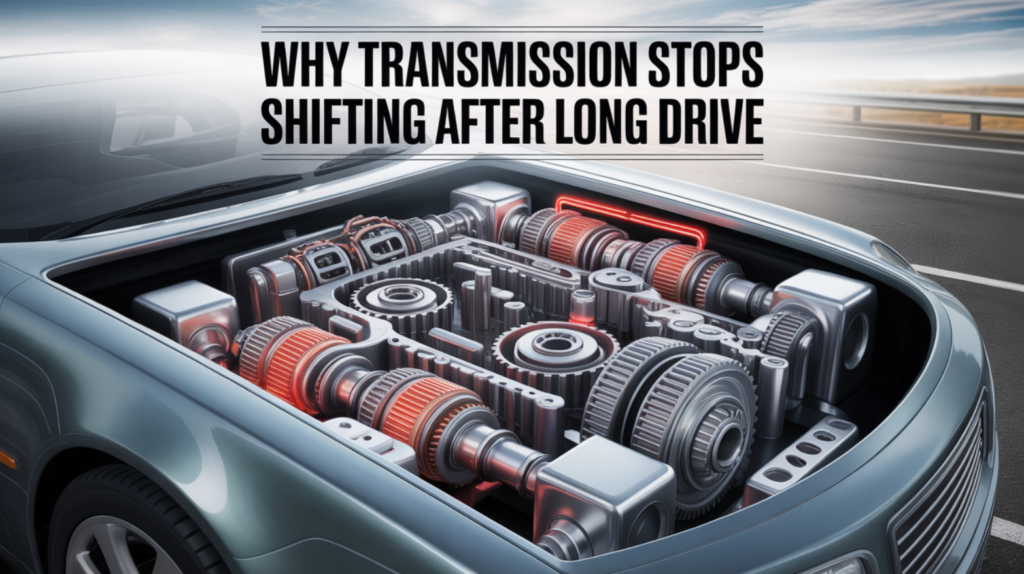
Extended driving creates sustained heat inside the transmission. As temperature rises, fluid gradually loses its ability to maintain stable pressure. Internal seals soften, clearances change, and the system becomes increasingly sensitive to load and speed changes.
At first, the driver may feel only minor hesitation. As the journey continues, shifting becomes rougher and less predictable. Eventually, the transmission may stop shifting entirely until it cools down.
Why Long Drives Expose Hidden Problems
Long drives do not usually create new faults. They reveal weaknesses that already existed. Components that performed adequately under short trips begin to fail when heat, pressure, and time combine.
Drivers experiencing this problem often report that the transmission also struggles once temperatures climb, since both situations involve thermal stress overwhelming the system.
Others notice similar instability when pulling heavy loads, where prolonged strain produces the same effect.
The Compounding Effect of Heat and Fluid Degradation
As fluid degrades, it generates more heat. That heat further degrades the fluid. This cycle accelerates internal wear and steadily reduces the transmission’s ability to manage precise shifts.
Without intervention, the system enters a downward spiral where every long drive worsens the next one.
Why Long-Drive Symptoms Must Be Taken Seriously
Shifting problems that appear after long drives indicate that the transmission is approaching its operational limits. Continued driving without correction greatly increases the likelihood of major mechanical failure.
Early diagnosis can prevent this progression and often saves the transmission from catastrophic damage.
How to Protect the Transmission on Long Trips
Regular fluid maintenance, proper cooling system operation, and avoiding excessive load or aggressive driving during extended travel significantly reduce stress. These habits stabilize internal conditions and preserve transmission health.
Final Understanding
Prolonged driving subjects the transmission to sustained heat, pressure, and wear. When those forces exceed the system’s capacity to remain stable, shifting can no longer regulate gear changes correctly.
Long-distance shift failures often reveal the true condition of the transmission’s internal systems.