Wheel spacers increase track width by pushing the wheels outward from the hub, creating a wider distance between the left and right wheels. Even a small shift—such as 10mm or 20mm per side—can create a noticeable change in stability, cornering behavior, and overall road presence. Understanding how track width changes helps drivers choose the correct spacer thickness for handling, stance, and clearance improvements.
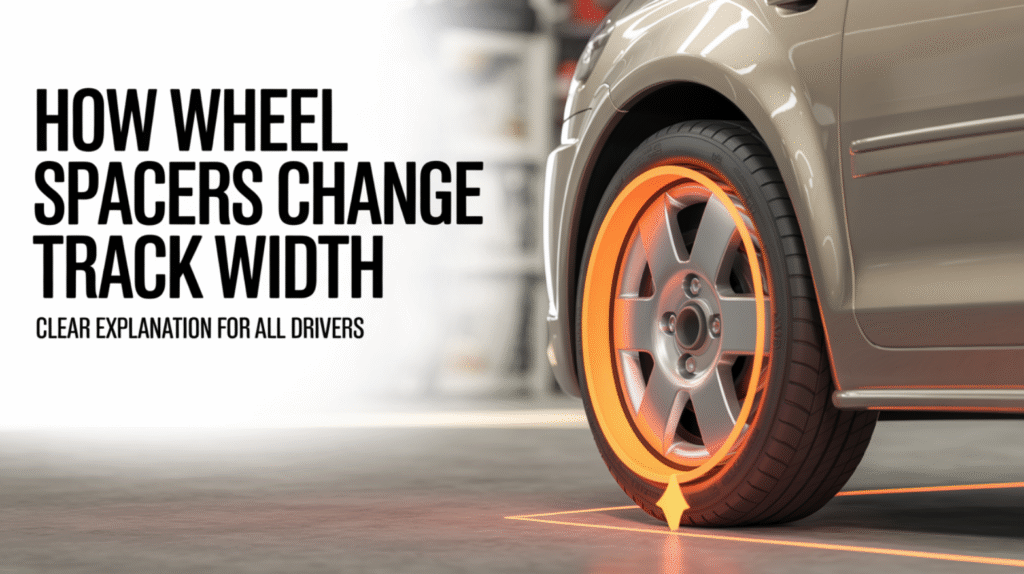
This guide explains exactly how wheel spacers alter track width, why wider track improves stability, and what effects drivers should expect.
For a full explanation of spacer safety, torque effects, and installation tips, visit the wheel spacers guide.
What Is Track Width?
Track width is the horizontal distance between the centerline of the left wheel and the centerline of the right wheel. Every vehicle has a front track width and a rear track width, and both play a major role in how the vehicle feels during:
- Turning
- Cornering
- Lane changes
- Highway driving
- Off-road movement
Track width directly influences how balanced, stable, and predictable a vehicle feels.
How Wheel Spacers Increase Track Width
Wheel spacers push the wheels outward by the exact thickness of the spacer.
If you install 25mm spacers, each wheel on that axle moves outward by 25mm.
The total track width increase becomes:
- 25mm per wheel
- 50mm total on that axle
This expanded width reduces body roll, increases stability, and helps the vehicle distribute its weight more evenly during cornering.
For example:
- A 10mm spacer increases total track width by 20mm
- A 20mm spacer increases total track width by 40mm
- A 30mm spacer increases total track width by 60mm
Even small increases create measurable changes in handling feel.
Why Wider Track Improves Handling
A wider track distributes dynamic load across a larger footprint.
This produces several benefits:
1. Reduced Body Roll
With wheels positioned further apart, the vehicle leans less in corners.
Drivers feel:
- More stability
- Less side-to-side movement
- More confidence during quick steering inputs
2. Better Cornering Grip
A wider stance increases the tire contact patch effectiveness.
This means the vehicle can enter and exit corners with greater control.
Performance cars and off-road trucks both benefit from this improvement.
3. Improved Straight-Line Stability
Wider track width helps the vehicle resist wobbling or drifting at higher speeds.
The center of gravity remains better supported, especially on SUVs and lifted trucks.
4. More Predictable Handling
Steering inputs translate more consistently because the suspension geometry remains balanced under load.
How Track Width Affects Suspension and Steering Geometry
Changing track width influences several steering and suspension characteristics, including:
Scrub Radius
Moving the wheel outward increases positive scrub radius.
This can create:
- Sharper turn-in feel
- Slightly firmer steering feedback
- More responsive corner entry
For performance-oriented setups, this is often desirable.
Roll Center and Lateral Load Transfer
A wider track lowers the effective roll center height relative to the vehicle’s motion.
This reduces the tendency to lean during turns.
Steering Stability During Braking
A wider stance helps keep the vehicle aligned when:
- Braking hard
- Downhill braking
- Braking on uneven roads
This creates a more planted, controlled feel.
How Much Track Width Should Be Added?
Drivers typically choose spacer thickness based on their goal:
Small Increase (3mm–8mm per side)
Good for:
- Minor rubbing
- Subtle stance improvement
- Fine-tuning wheel fitment
Moderate Increase (10mm–20mm per side)
Good for:
- Noticeable stance changes
- Handling improvements
- Slightly wider wheels
- Better cornering stability
Large Increase (25mm–40mm per side)
Best for:
- Lifted trucks
- Off-road vehicles
- Very wide tires
- Aggressive stance builds
Large increases provide a dramatic change but must match suspension geometry and vehicle purpose.
How Track Width Change Improves Fitment and Clearance
Wider track width also solves fitment problems.
When wheels sit too close to:
- Control arms
- Struts
- Inner wheel wells
- Brake calipers
A small track width increase pushes wheels outward to eliminate interference.
This is especially helpful for:
- Wider all-terrain tires
- Aftermarket wheels with high offset
- Big brake kits
Track Width Increase on Trucks vs Cars
On Trucks and SUVs
A wider track dramatically improves stability, especially after:
- A lift kit
- Larger tires
- Off-road suspension upgrades
Trucks lean more due to higher center of gravity, so a wider stance reduces sway.
On Cars and Sports Sedans
Increasing track width makes the vehicle corner tighter and feel more planted.
Sports cars benefit from:
- Improved corner exit grip
- Sharper turn-in behavior
- Balanced handling at high speeds
Does Increasing Track Width Affect Ride Comfort?
Not directly, but many drivers notice:
- Smoother corner transitions
- Less sway on curves
- More confidence at high speeds
The ride may feel slightly firmer at the steering wheel because sensitivity increases when the wheels sit wider.
Are There Downsides to Increasing Track Width?
Increasing track width through spacers is safe when installed correctly.
Potential downsides appear only with improper choices:
- Too much thickness can alter scrub radius excessively
- Cheap spacers may introduce vibration
- Incorrect torque can lead to instability
- Weak studs or lug nuts can’t handle the leverage
Using high-quality, hub-centric spacers eliminates most of these concerns.
For an in-depth look at how wheel spacers influence stance, handling, torque, and safety, see the complete wheel spacers guide.
Conclusion
Wheel spacers increase track width by pushing the wheels outward, improving stability, cornering grip, steering feel, and overall handling predictability. Even small changes make a noticeable difference, especially on trucks, SUVs, and performance cars. Whether solving clearance issues, improving stance, or enhancing driving dynamics, track width modification is one of the main reasons wheel spacers are used.