Cold mornings reveal how much your vehicle depends on temperature for smooth operation. One of the most common winter complaints from drivers is harsh or jerky shifting during the first part of a drive.
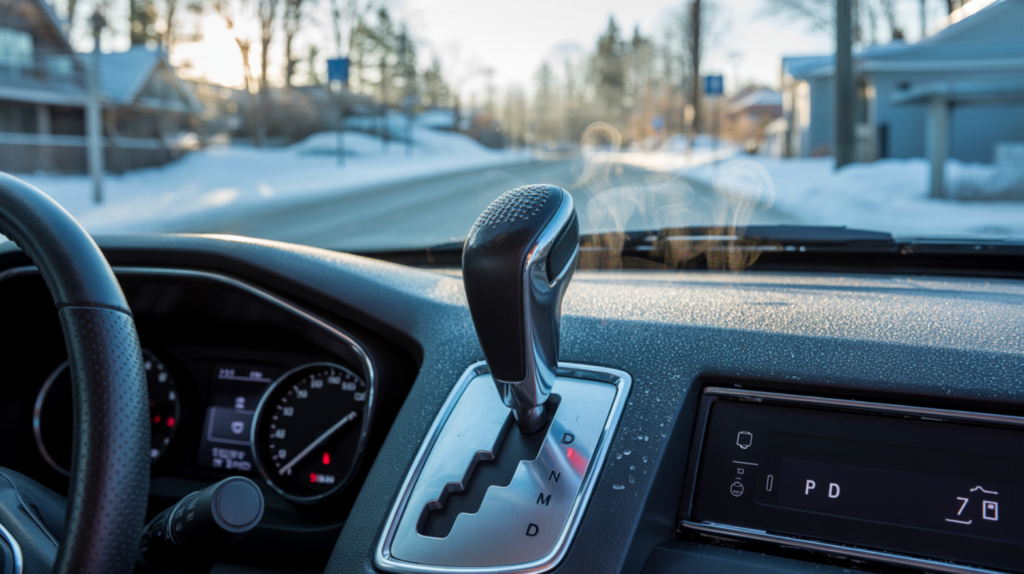
The car may lurch when changing gears, hesitate before engaging, or feel unusually stiff until it has been running for several minutes. This behavior is uncomfortable, but more importantly, it tells a mechanical story.
What Drivers Experience on Cold Starts
The first few shifts of the day feel heavy. The transmission seems reluctant to cooperate. Acceleration becomes unpredictable, and each gear change arrives with more force than expected. As the engine and transmission warm, the roughness fades and the vehicle settles into its normal driving pattern.
This early-drive roughness often appears alongside cold-start slipping, which is described in Why Your Transmission Slips Until It Warms Up, because both symptoms are rooted in how cold alters internal transmission behavior.
Why Cold Temperatures Make Shifts Harsh
Automatic transmissions rely on fluid pressure to cushion and control every gear change. In low temperatures, the fluid thickens, delaying pressure buildup and reducing the precision of hydraulic control. At the same time, metal parts contract slightly, tightening internal clearances and increasing resistance within the system. The result is abrupt engagement rather than smooth transition.
As the vehicle warms, fluid viscosity decreases, seals expand, and pressure becomes more stable. This restores smooth shifting and hides the problem from the driver’s awareness.
When Rough Shifting Points to a Deeper Issue
Occasional stiffness on freezing mornings is expected. But if hard shifting happens regularly whenever temperatures drop, it often signals underlying wear. Old or contaminated fluid, restricted internal passages, worn valve bodies, or degraded seals become far more noticeable under cold stress.
Some drivers also notice long delays before the transmission responds at all, a more severe version of the same cold-pressure problem discussed in Transmission Delayed Engagement in Cold Weather.
Driving and Maintenance Adjustments That Help
Giving the vehicle a brief warm-up period, driving gently during the first few minutes, and replacing transmission fluid before winter begins all reduce strain on the system. These steps help stabilize pressure sooner and minimize wear on internal components.
Harsh shifting on cold mornings is rarely an isolated complaint. It connects directly to a broader group of winter symptoms that affect many vehicles, all of which are outlined in the main resource on cold-weather transmission problems.
Why This Symptom Shouldn’t Be Ignored
Harsh shifting on cold mornings is not just an inconvenience. It is an early warning that internal conditions are becoming sensitive to temperature changes. Responding early preserves the transmission’s long-term reliability and prevents seasonal discomfort from evolving into permanent damage.