A transmission that behaves normally when cold but begins slipping, hesitating, or refusing to shift after warming up can feel confusing and frustrating. Many drivers first notice the issue after highway driving or sitting in heavy traffic on a warm day.
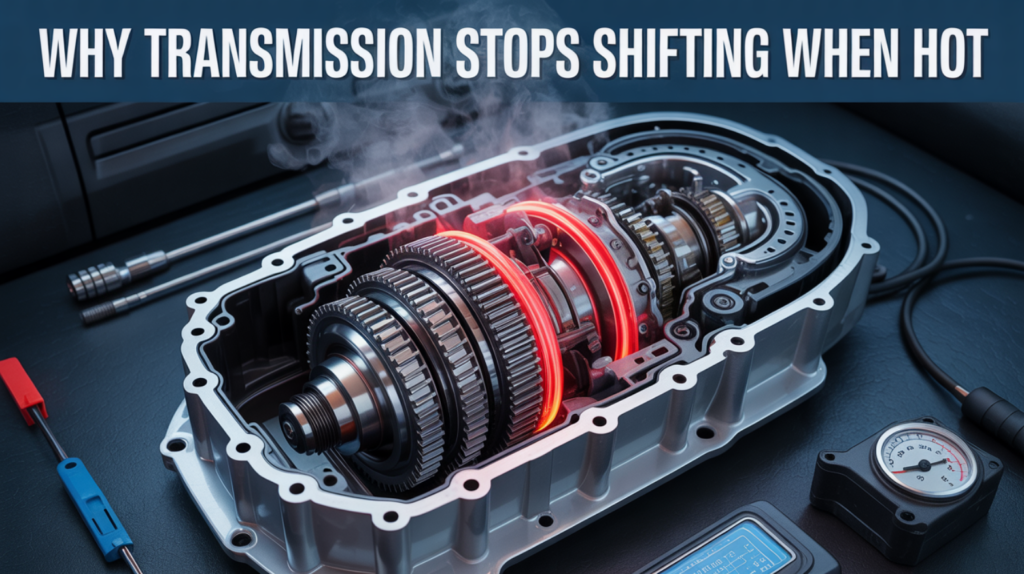
What they are experiencing is not random malfunction. It is the mechanical system reacting to rising internal temperature.
This behavior fits into the broader pattern of why transmissions stop shifting under certain conditions, which is explored in detail in the main guide here:
Why Transmissions Stop Shifting Under Certain Conditions.
How Heat Disrupts Transmission Performance
As operating temperature increases, transmission fluid becomes thinner. Thin fluid cannot maintain the same pressure needed to hold clutches and engage gears firmly. At the same time, internal seals soften and expand, allowing pressure to leak where it should remain sealed.
When these changes occur together, the transmission control system struggles to maintain stable engagement. Shifts become delayed, gears slip, or the transmission refuses to change gears altogether.
This is why a vehicle may drive normally for the first few miles and then slowly develop shifting problems as heat builds.
Why Hot Shifting Problems Appear Suddenly
Heat accumulates gradually, but its effects are often felt suddenly. Once fluid temperature passes a critical point, pressure loss becomes significant enough to interrupt gear changes. The driver may feel this as if the transmission has “lost its grip” on the road.
This same thermal stress explains why some vehicles that struggle in hot conditions also exhibit problems after long drives, when sustained heat exposure finally overwhelms weakened components.
The Hidden Role of Cooling Systems
Transmission cooling systems are designed to regulate temperature, but even small failures in cooling efficiency can magnify hot-weather shifting problems. Blocked coolers, restricted fluid flow, or degraded coolant reduce heat dissipation and accelerate fluid breakdown.
Drivers who tow heavy loads often discover that these conditions become more severe when towing, as increased torque demand and reduced airflow combine to drive temperatures even higher.
Why Hot Shifting Problems Rarely Stay Isolated
Once a transmission begins failing under heat, the cycle feeds itself. Slipping generates more heat. More heat weakens fluid and seals. Weakened components then allow even greater pressure loss.
Over time, the transmission may start to misbehave in other situations as well. What begins as a hot-weather problem can later appear during cold starts, in traffic, or under load.
How to Protect a Transmission from Heat Damage
Keeping fluid clean and at the correct level, ensuring the cooling system functions properly, and avoiding aggressive driving during extreme heat significantly reduce thermal stress. Early attention prevents heat-related shifting issues from becoming permanent mechanical damage.
Final Understanding
High temperature places intense strain on transmission systems by thinning fluid, weakening seals, and destabilizing pressure control. When those effects exceed the system’s ability to compensate, shifting fails to maintain stable gear engagement.
Managing heat exposure is one of the most effective ways to slow long-term transmission deterioration.