Some of the most unsettling transmission problems happen in the middle of a turn. A vehicle may hesitate, refuse to shift, or suddenly feel as if the drivetrain has lost coordination. For many drivers, the issue appears out of nowhere, even though the car seemed perfectly fine while driving straight.
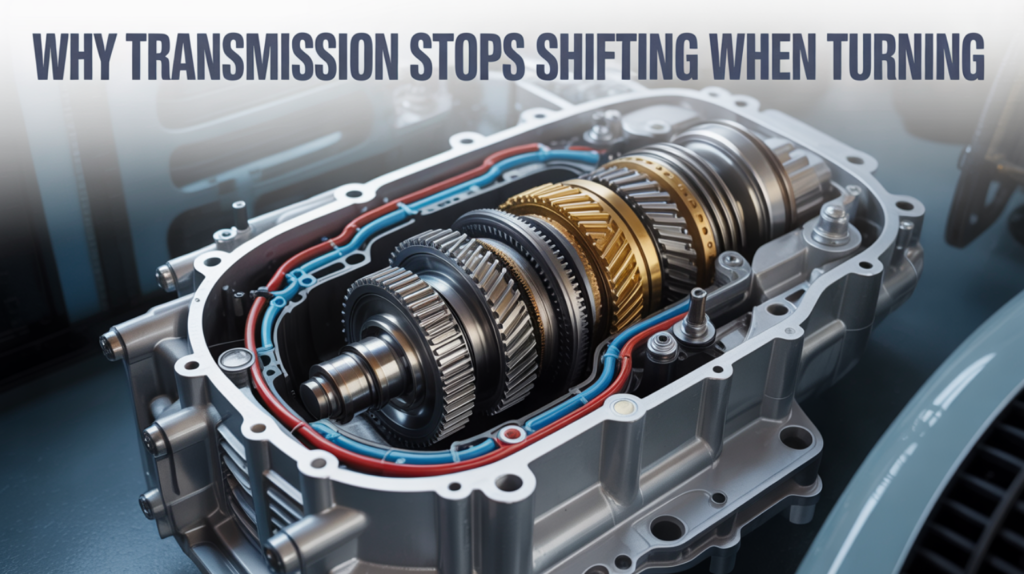
This behavior fits into the larger pattern of why transmissions stop shifting under certain conditions, which is explained in the main diagnostic guide:
Why Transmissions Stop Shifting Under Certain Conditions.
What Happens Inside the Transmission During a Turn
When a vehicle turns, weight shifts across the chassis. This shift changes how transmission fluid moves inside the pan and how pressure distributes through the hydraulic system. At the same time, drivetrain angles change, affecting torque delivery from the engine to the wheels.
If fluid levels are slightly low or internal components are already worn, this redistribution of pressure becomes significant. The transmission control system may receive inconsistent signals and hesitate to engage the next gear.
The result can feel like the transmission simply “freezes” mid-turn.
Why Turning Reveals Hidden Problems
Turning exposes weaknesses that straight-line driving often hides. During a turn, the transmission must coordinate multiple inputs at once: throttle position, wheel speed, torque demand, and fluid pressure.
When one of these inputs becomes unstable, the system loses synchronization. That instability is why many drivers who experience turning-related problems later notice similar symptoms when braking, since braking creates a comparable shift in load and torque direction.
The Influence of Fluid Level and Condition
Low or degraded fluid worsens turning-related problems. As the vehicle leans through a turn, fluid moves away from the pickup, allowing momentary air intake into the hydraulic system. Even brief air pockets interrupt pressure and delay shifts.
This same fluid sensitivity also explains why vehicles that hesitate in turns may later struggle when accelerating, when pressure demands rise sharply.
Why Ignoring Turning Symptoms Is Risky
Turning-related shifting problems often mark the beginning of broader failure. Each hesitation increases internal wear, placing stress on clutches and valves. Over time, the transmission begins misbehaving in more situations, not just during turns.
What starts as an occasional hesitation can grow into persistent shifting failure.
How to Reduce Turning-Related Shifting Issues
Maintaining proper fluid level, replacing degraded fluid early, and avoiding aggressive cornering reduce pressure instability. These simple steps help stabilize internal systems and prevent small turning-related symptoms from escalating.
Final Understanding
Turning changes how load, pressure, and fluid behave inside the transmission. When those shifts exceed the system’s ability to maintain balance, shifting can no longer hold proper shift timing.
Cornering symptoms usually signal deeper balance issues that deserve immediate inspection.